The Speak Easy Bookshelf
That conversation you're replaying at 2am?
Nobody taught you how to do this.
Communication skills for every kind of mind.
Four playbooks that do. The same 12 communication skills, written separately for kids, teens, adults, and professionals. On Amazon in Kindle and paperback.
The Speak Easy Bookshelf
Four books. One system.
Adults, Teen and Kids available now on Amazon. Pro out 6 October 2026.
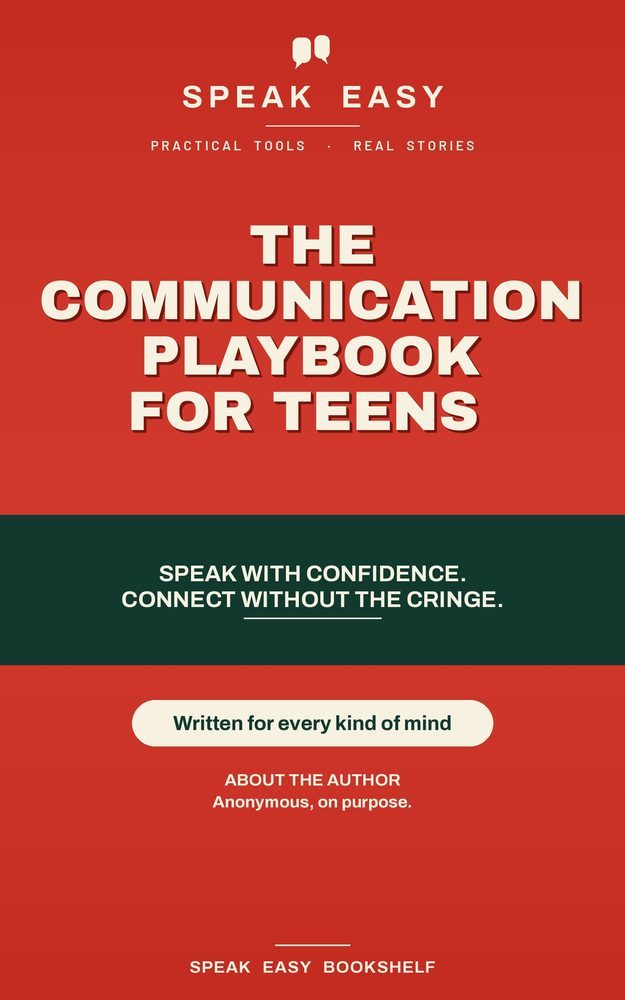
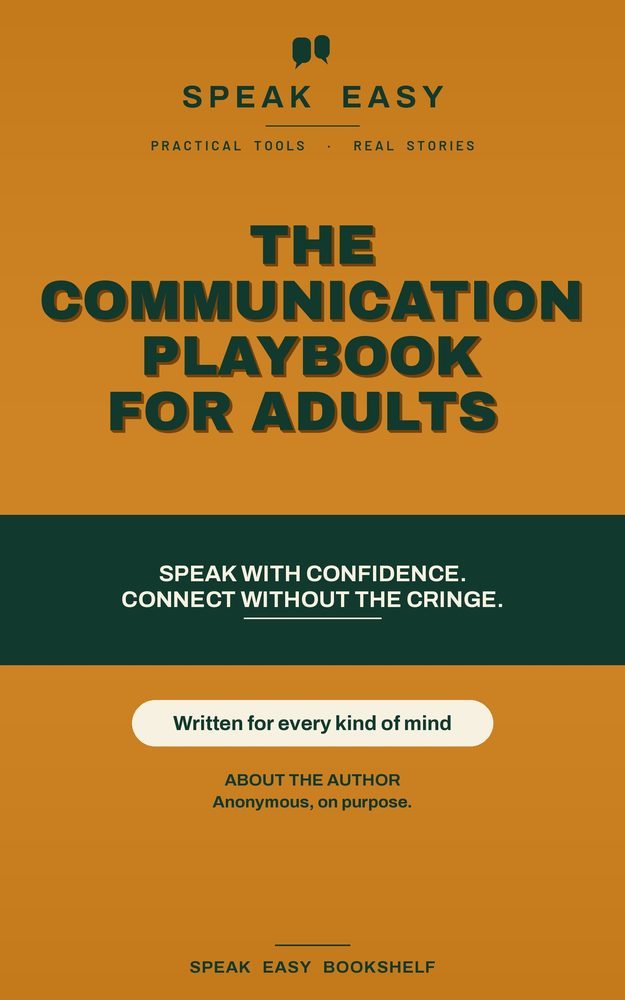
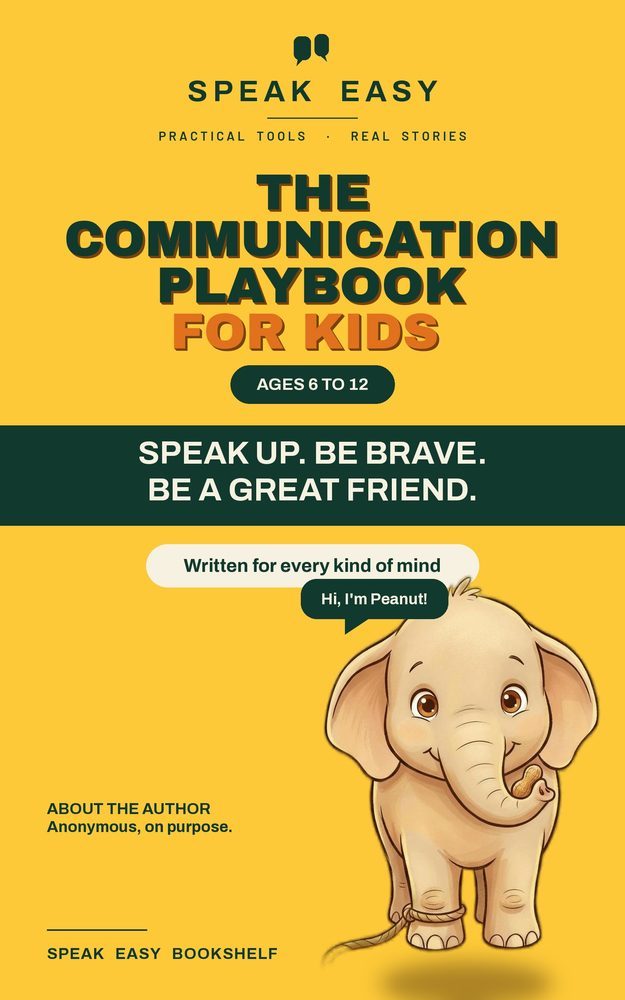
Choose Your Edition
Written for where you are right now.
Same 12 core skills. Same XP system. Same research. Different voice, different stories, different world.
Buying for yourself? Start with Adults. Buying for someone else? Their age picks the book: 6 to 12 Kids, 13 to 17 Teen, 18 and up Adults.
Speak Easy is a series of communication playbooks from Speak Easy Bookshelf teaching the same 12 skills at four reading levels, available on Amazon in Kindle and paperback.
| Edition | Ages | Pages | Format |
|---|---|---|---|
| Adults | 18+ | 129 | Kindle & Paperback |
| Teen | 13–17 | 151 | Kindle & Paperback |
| Kids | 6–12 | 65 | Kindle & Paperback |
| Pro | Professionals | 480 | Pre-order, out 6 Oct 2026 |
For adults who were never formally taught communication skills, and are done pretending that's fine. Direct, research-backed, no fluff. Covers the exact moments that matter in an actual week: the interview, the awkward pause, the text you rewrite four times before sending.
Same skills. Real talk. Written for teenagers navigating school, friendships, and figuring out who they actually are. Includes chapters on texting, DMs, reading a room, setting limits, and recovering when a moment goes sideways.
Same 12 skills, taught through Peanut the elephant and illustrated exercises. For kids building their voice early. Short chapters, star missions, and stories they'll recognise from the cafeteria, the classroom, and the playground.
Sixty-five illustrated pages, built to be read with Peanut and actually finished.
Get Kids Edition on Amazon ↗ For parents: how this one works →Not sure which one? Answer five questions and we’ll tell you which edition is for the problem you actually have.
Read Before You Buy
The opening of Chapter Zero, from each edition.
Every edition starts with the same first move. The one that changes everything else that follows it.
Jake was twenty-seven, three minutes from a job interview, rehearsing his own name in a bathroom mirror like it was a foreign word. "Jake." Too quiet. "Jake." Better, but his hand was shaking. He walked into the conference room, shook hands, and when it was his turn to introduce himself, his name came out barely audible, swallowed halfway through.
Nobody in the room reacted badly. Nobody had to. The silence that followed, in his head, lasted a lot longer than it actually did.
That night, at a friend's birthday dinner, something different happened. Someone asked his name, and instead of shrinking it, he said, "Jake. Lover of bad puns, mostly harmless." A couple people actually laughed. Someone repeated it back to him ten minutes later, unprompted. He felt, for the first time that day, actually in the room.
Most people treat their name as a formality, the thing you get through before the real conversation starts. That's backwards. Your name is the first data point anyone has about how much space you're willing to take up.
You don't need a script that sounds like someone else wrote it for you. You need two small moves, in order: Anchor it (say your name at a normal, unhurried pace) and Offer something (one small, true detail attached to your name). That's it. That's the whole formula.
"I'm Priya. I make terrible coffee and I will still offer you some."
First day at a new school. Third period. The teacher smiles and says, "Let's go around and introduce ourselves." Your turn is four people away. Three. Two. You can hear your own heartbeat now. When it finally lands on you, you say your name down at the desk, about half of it, and add nothing. "Sorry, what was that?" the teacher says. You say it again, somehow quieter, and it's over.
Two seats down, someone said their name like it was the easiest thing in the world. Added one line (that they're into horror movies) and a couple of people laughed and nodded. Same room. Same thirty seconds. Completely different result.
The difference wasn't confidence they were born with. It was one small thing, and it's a thing you can learn.
Your name is your first move. Say it clearly and land one real thing about yourself, and people lock in. Mumble it and disappear, and you spend the rest of the conversation trying to catch up.
Real examples, all reusable: "I'm Sol. I skate and I make playlists for every mood." "I'm Ren. I draw, and I'm learning guitar (badly)." "I'm Dev. I game, and I speak three languages." None of these are impressive on purpose. They're just true and specific. Specific is what makes a person real to someone who just met them.
It was Peanut's first day at a new school. Her tummy felt like it was full of jumpy frogs. She squeezed her lucky peanut extra hard.
The teacher smiled and said, "Let's all say our names!" Peanut's heart went BOOM. BOOM. BOOM. She wanted to turn into a very small, very quiet rock. When it was finally her turn, she looked at her desk and said her name so quietly it came out like a tiny mouse hiccup. "...peanut." "Sorry, who?" said the teacher. Peanut said it again. Even quieter.
Then a fox two seats over popped up, tall and easy. "I'm Rae! I can wiggle my ears one at a time, and I love spicy noodles." A couple of kids laughed. Rae wiggled one ear to prove it, then sat back down like it was no big deal at all.
"I'm Peanut" is a name. "I'm Peanut, and I'm way stronger than I look" is a person you want to know. See the difference? The second one hands people a door.
How to do it: Stand tall. Say it clear. Add one true thing. Something you like. Something you're into. Something that's just you.
The 12 Core Skills
What every edition covers.
Same foundation across all four books. The language and stories change. The skills don't.
Free Guides
Thirty guides. Start with the one you need this week.
Every guide teaches one named method from the books, names the research behind it, and says where it stops working. No sign-up.
The XP System
You level up by doing, not just reading.
Every chapter has optional challenges worth XP. Five tiers of difficulty. No leaderboard, no pressure. Just a way to track your own progress through real-world reps.
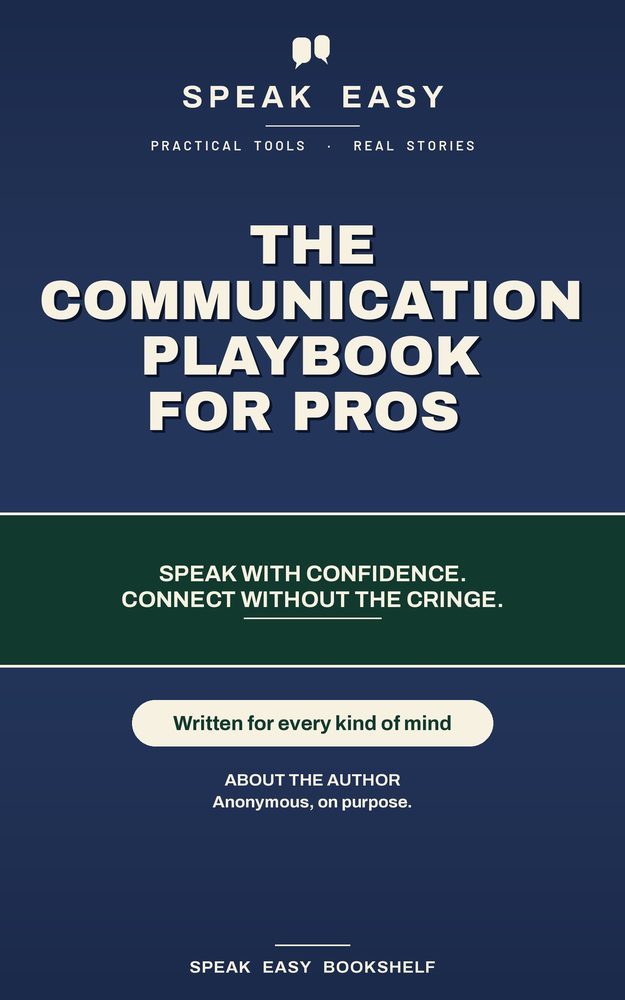
Speak Easy Pro Edition
The Communication Playbook for Pros: The Conversations That Decide Your Career
The flagship. Built for adults who've already read the basics and want to go deeper: influence, negotiation, high-stakes conversations, the full architecture of how communication actually works at the professional level.
Common Questions
FAQ
Available Now on Amazon
Pick your edition.
Kindle and Paperback. Start reading today.
As an Amazon Associate, Speak Easy Bookshelf may earn from qualifying purchases.